The Peas of God
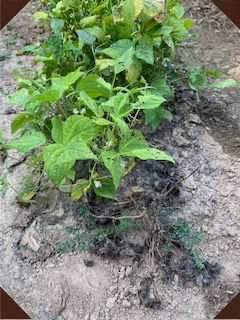
Funny things happen sometimes when a minister is preaching in one language and someone else is interpreting for a congregation. On this particular Sunday, the minister said something about "the peace of God." The interpreter got this funny look on his face, glanced quizzically at the preacher, then interpreted the phrase as "the peas of God."' Most of the congregants scratched their heads at this but those of us who knew both languages had to bite our cheeks to keep from laughing. The peace of God, the peas of God? Years later, though, I think the interpreter was on to something.
Every year Dennis and I learn something new about gardening. The year of the great storm that downed a humungous tree by the creek and ended up breaking part of our back fence taught us that the ashes from a fire (that's where the big tree ended up) cause the plants grown in the soil where the ashes end up to grow bigger, better, and more bountifully. Who knew? Last year we learned that grape vines should be treated way differently from our fruit trees. While fruit trees love to be pampered with fertilizer, grapes, not so much. They thrive in rocky, unfertilized soil—the more they struggle to set down roots, the sweeter the fruit. Who'd a thunk? Then this year we have ye olde green beans speak to us.
Dennis doesn't plant the same type of plants every year. When garden time rolls around in the spring, if we still have a lot of cans of butter beans, for example, we don't plant butter beans that year. He rotates the plants according to what we've run out of. This year it was time to plant green beans again.
Two rows of green beans yielded 19 gallons and 1 quart. We were able to can 27 quarts, eat some fresh from the garden, and share the rest with family and friends. A pretty good haul, if you ask me.
Green beans hold a special place in my heart because of a summer when one of our Texas granddaughters came to visit right at green-bean picking time. That year, Sophia, with her eternally effervescent joyful persona, helped me pick green beans. I have heart-warming memories of her skipping between the rows, and playing with me as we picked. I will always, always love picking green beans because of that girl. So it was a bittersweet day when Dennis announced that it was time to terminate the green bean plants. The weather had gotten quite hot, something not conducive to green bean production, and the plants were waning, a few even shriveling up.
This year, however, Dennis had learned something new about our green bean plants. Though well aware of the purpose of the plants' roots while alive—anchoring the plant, absorbing water and nutrients—we hadn't known about root benefits that occur even after the plant's natural aging and demise. So this year, instead of uprooting the old plants when their life came to an end, he would cut them off at the soil line, leaving their roots intact. It turns out that when the roots are left in place, they release a natural fertilizer, nitrogen, that benefits future gardening, as well as providing channels helpful for aeration and drainage. As Dennis dropped these new deets on me (yes, I'm showing off here—"deets" is a newer slang term for details—who said you can't teach an old dog new tricks?), I experienced an "aha" moment. The green beans' roots are beneficial. They might be dead and gone, but their roots continue to bless the soil and future generations of garden plants.
Ding, ding, ding! Spiritual comparison begging to be made! There are many Bible passages that compare the child of God to a plant. Psalm 1:1-3 compares the righteous to trees planted by the water. Matthew 7:16-20 talks about our being judged by our "fruit." Jesus told the parable of the sower, likening believers to types of plants. 1 Corinthians 3:6-7 uses plants as a metaphor for new believers. I think it's safe to say that in God's eyes we are like plants. We are all well aware of the benefits of absorbing God's Word and Holy Spirit during our life, like plants absorbing life-giving water and nutrients through their roots. But, what about after death? If the roots of plants continue to benefit the soil in which they were planted, benefiting others even after their demise, what does that say about us?
Proverbs 10:7 says that the memory of the just is blessed. The ministry of the righteous man (or woman) does not end when they die. When people think about them, their memory brings joy, warmth, encouragement. The footsteps they leave behind are paths for the righteous who still live to follow. In Revelation we see a picture of a reverence given, an honored place, for those who give their lives for the Word of God (Rev. 6:9). Who we are, the blessings our life bestows on others, does not end with death. All the good that we have lived will live on and continue blessing even after we are gone. Didn't Jesus say of the woman who washed His feet, "wherever the gospel is proclaimed in the whole world, what she has done will be told in memory of her" (Mark 14:9)?
With this new understanding of how very important the plants' roots are, how they keep ministering even after death, I now think that that translator who called "the peace of God" "the peas of God" was speaking words of wisdom, even if he wasn't aware of it. The wonder of God, the grandeur of God in the life of His children, does not end with their death. Their lives, those epistles read by all men, live on, speaking of God's mercy and greatness, even after they are gone. Even in death, the life of the saint of God ministers the peace of God to those who are left behind.
Peas of God, forever.
"The righteous will be remembered forever" (Psalm 112:6).
"A good name is better than precious ointment" (Ecclesiastes 7:1).


Comments